

Wi-Fi is often the most visible and most criticized aspect of any modern network. When it functions properly, it goes unnoticed, but when it fails, it quickly becomes the focus of attention.
Wi-Fi is often the most visible and most criticized aspect of any modern network. When it functions properly, it goes unnoticed, but when it fails, it quickly becomes the focus of attention. Deploying a reliable Wi-Fi network requires more than simply placing access points on a ceiling and expecting optimal performance. It necessitates a thorough understanding of RF behaviour, meticulous interference management, and a precise balance between capacity and coverage.
In Oakdale, California, USA, a precise wired and wireless site survey underscored the critical importance of meticulous planning and execution in optimising network performance, resulting in the strategic installation of the site to ensure robust and seamless connectivity. Through detailed spectrum analysis, strategic access point placement, and precise channel planning, the deployment team addressed these challenges head-on. The installation process was designed not only to meet current demands but also to ensure scalability for future growth. By leveraging industry-standard tools and methodologies, the team successfully implemented a network that delivers robust performance, reliability, and security. With the foundation in place, let's explore the essential strategies and best practices that drive a successful network installation.
Critical Findings from Pre-Deployment and Wired Surveys
Wireless Coverage Optimisation
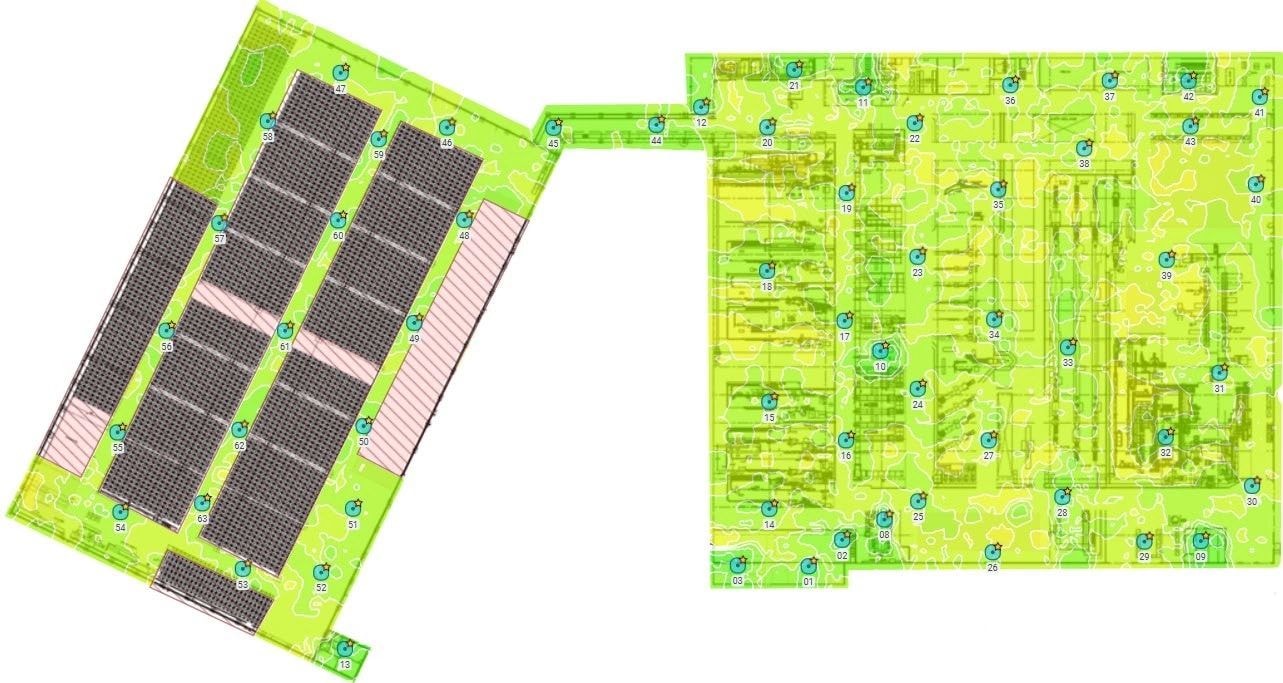
- Total facility area surveyed: approximately 400,000 sq. ft. necessitating multiple strategically positioned Access Points (APs).
- Rigorous evaluation of signal strength and coverage areas highlighted several key locations prone to dead zones requiring targeted remedial action.
- Coverage and dead zones were identified, highlighting the need for improved coverage, particularly in warehouse storage and production areas.
Signal Strength & Interference Mitigation
- Minimum acceptable Received Signal Strength Indicator (RSSI): -65 dBm; Signal-to-Noise Ratio (SNR) maintained above 25 dB for optimal connectivity.
Structured Wiring and Fiber Infrastructure
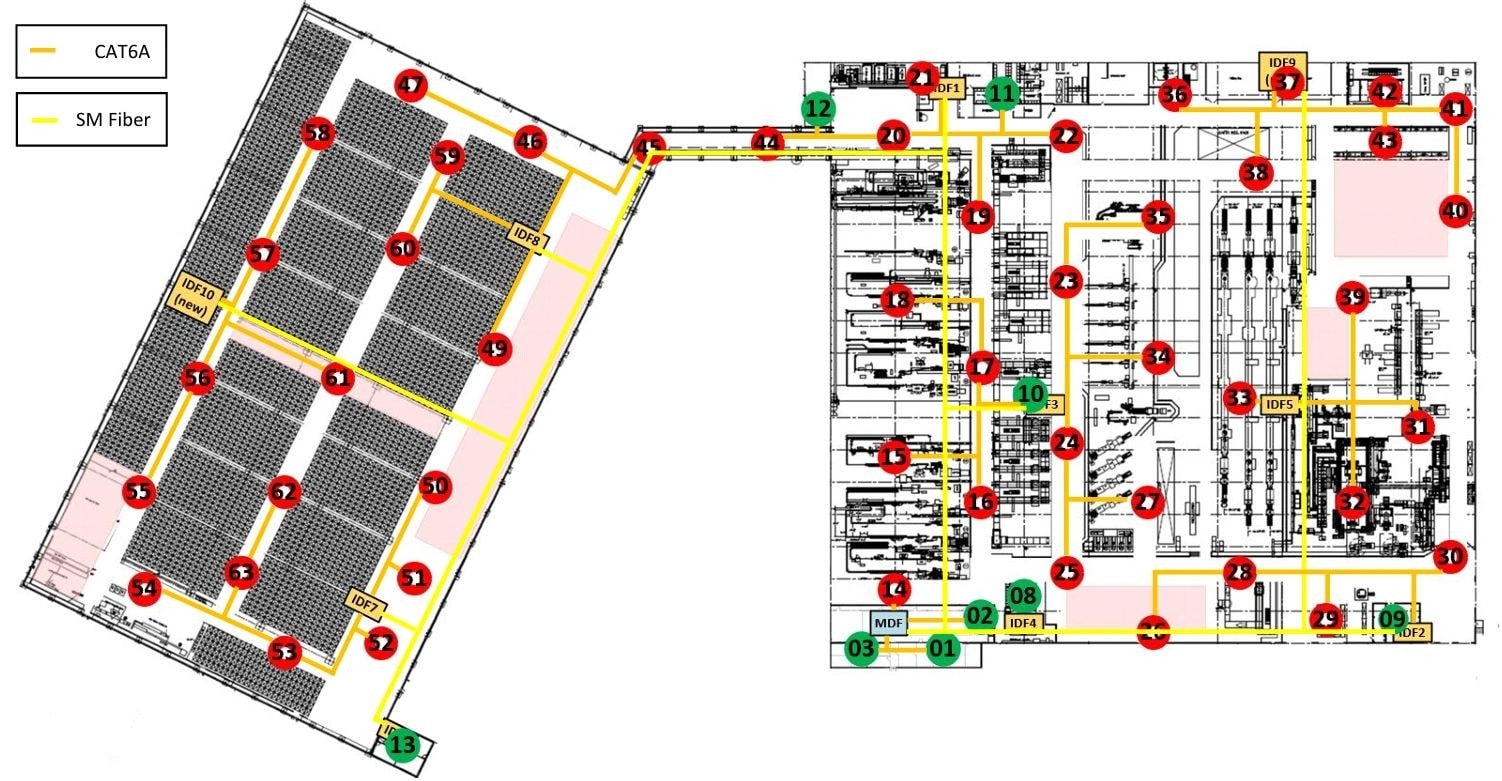
- Deployment preference for Category 6A cabling to uphold the integrity of high-speed data transmission within recommended distances.
Significant infrastructure enhancements:
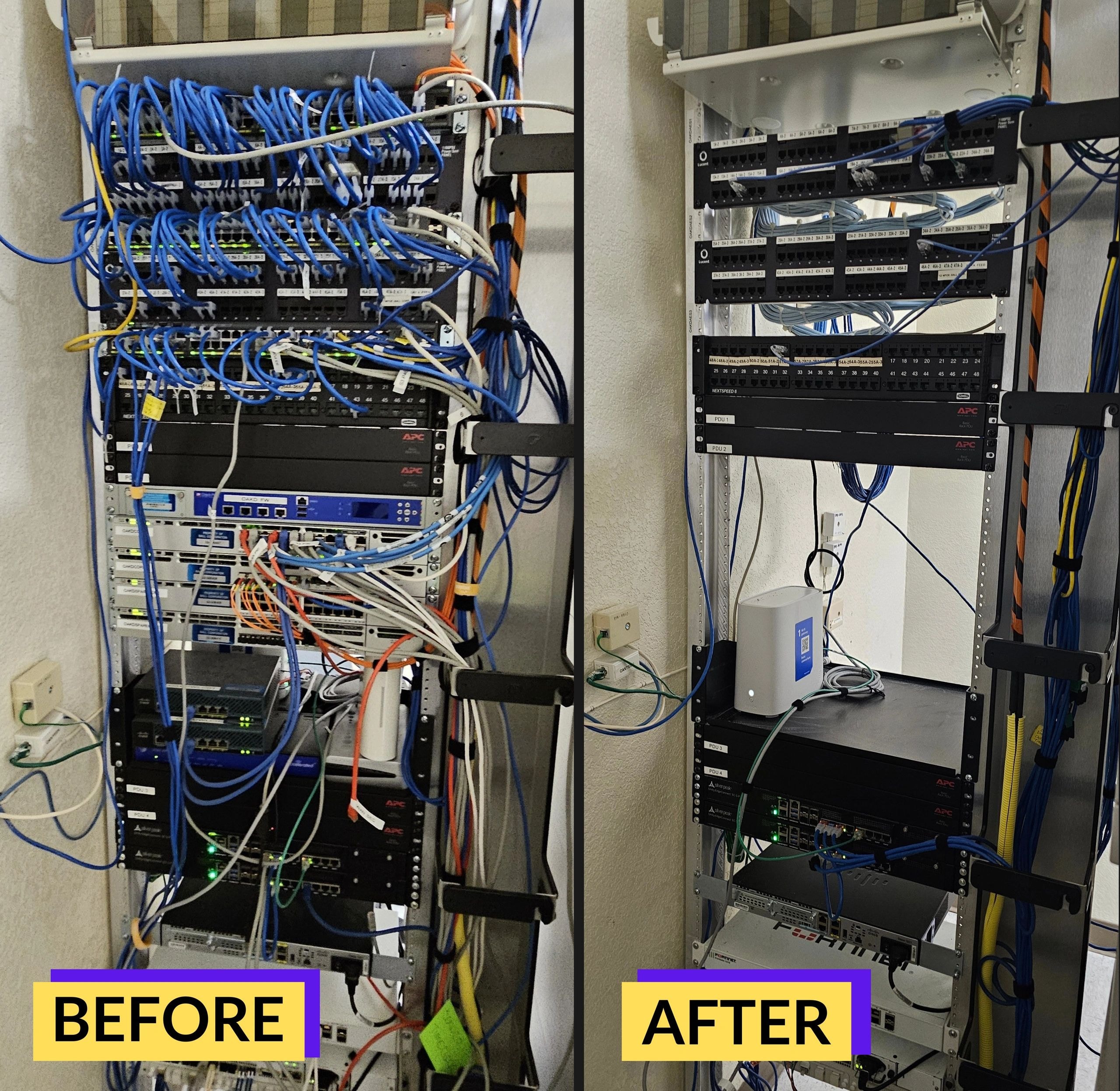
- Replacement of existing Cat5 and Cat5e cables with Category 6A standards.
- Infrastructure optimisation involved replacing outdated MDF/IDF racks and optimising power distribution.
- Installation of new Single Mode (SM) fiber optic cables interconnecting MDF and multiple Intermediate Distribution Frames (IDFs) locations to ensure resilient backbone connectivity.
- Fiber backbone implementation involved installing 12-strand single-mode fiber to enhance network redundancy and speed.
Detailed Installation Methodology
After the strategic pre-installation planning phase, which involved analysing pre-deployment survey data using Ekahau Pro-generated heatmaps and procuring essential network hardware, the next step is the physical installation and structured wiring process. Once the structured wiring is verified, the installation phase begins, encompassing physical mounting, configuration, and validation procedures.
Physical Installation Process
Cable Installation:
- Employ trained technicians to safely pull Category 6A cables, meticulously following pre-determined routes that mitigate interference.
- Utilise scissor lifts for safe and efficient access to elevated installation points, particularly within warehouse environments up to 41 feet.
- Ensure systematic labelling of cables at both ends for accurate identification and ease of future maintenance.
- Install new single-mode fiber optic strands precisely between MDF and IDF locations, ensuring optimal data transmission over longer distances.
Equipment Mounting:
- Precisely drill and install mounting brackets and fixtures on drop ceilings for Access Points in administrative office areas.
- Securely attach AP's and Omni-directional antennas to I-beams, conduit supports, and open iron frameworks in production and warehouse areas, ensuring proper orientation for maximum coverage.
Rigorous Configuration and Network Testing:
- AP configurations with transmit power standardised at 11 dBm across both 2.4 GHz and 5 GHz frequency bands.
- Distinct SSID segmentation to facilitate seamless and secure network interactions across corporate, guest, and IT systems.
- Execution of extensive real-time connectivity validations employing continuous ping testing methodology across critical facility zones.
Step-by-Step Installation Process
1. Pre-Installation Planning
- Assessed site survey data to determine optimal AP placement and cabling routes.
- Procured necessary hardware, including Cisco switches, APs, and structured wiring materials.
- Ensured compliance with safety and security protocols.
2. Physical Installation
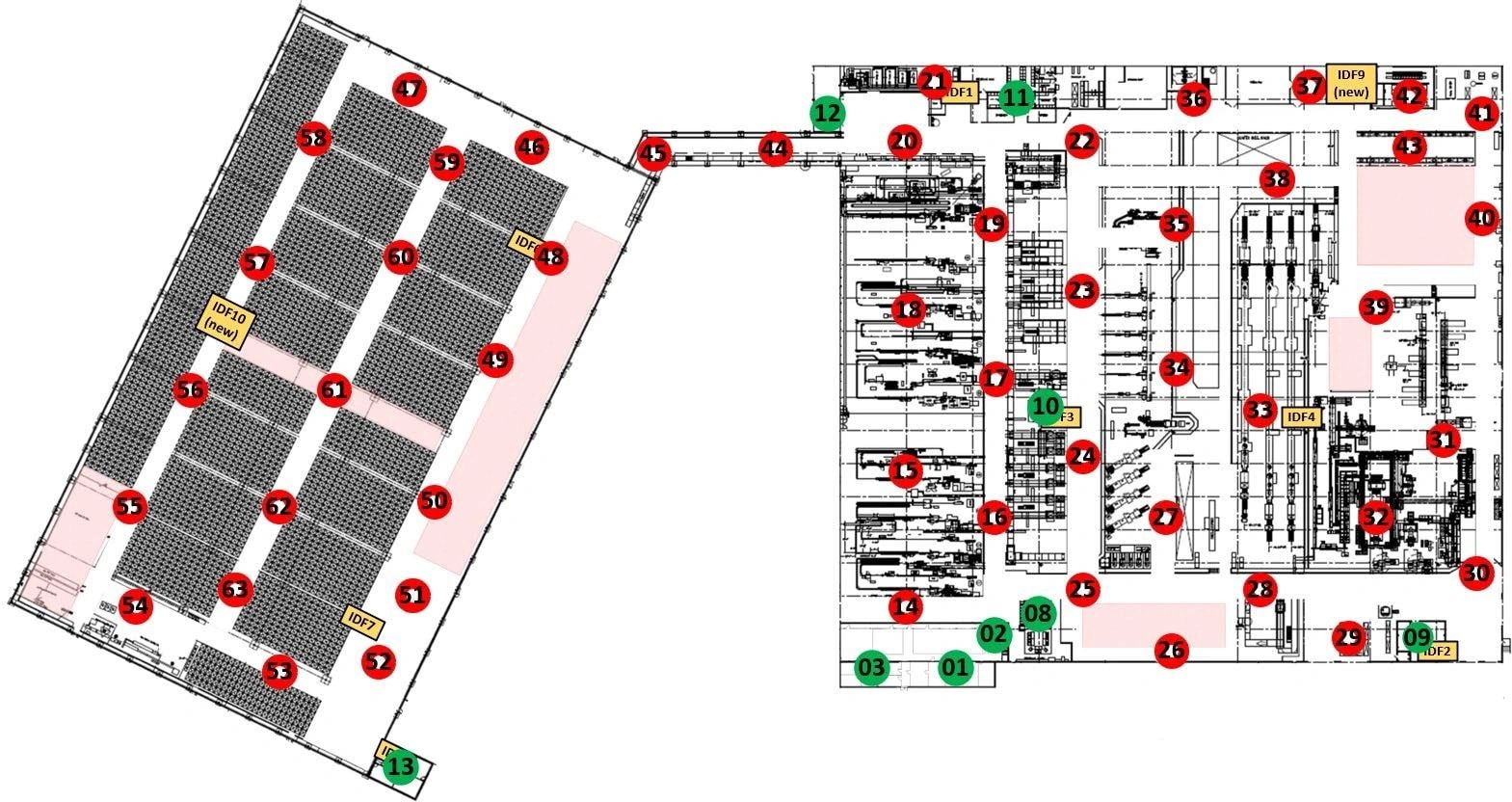
- Deployed structured wiring, ensuring all cabling adhered to industry standards.
- Installed access points at strategic locations, optimising coverage for both 2.4GHz and 5GHz bands.
- Implemented redundant fiber uplinks to guarantee uninterrupted data flow.
3. Configuration & Testing
- Configured SSIDs, VLANs, and QoS policies for seamless traffic management.
- Conducted wireless heatmaps and performance benchmarks to validate installation success.
- Ensured seamless integration and transition with existing IT infrastructure.
Final Thoughts
A professionally executed network installation is a strategic investment that empowers your industrial facility to achieve enhanced operational efficiency, streamlined communications, and heightened productivity. By leveraging detailed pre-installation surveys, precise infrastructure deployment, and comprehensive testing methodologies, organisations can proactively eliminate connectivity issues and downtime, ensuring reliable and resilient network performance.
Beyond the immediate benefits of stable and robust connectivity, a thoughtfully planned installation provides a scalable framework capable of adapting to future technological advancements and growth. As technology continues to evolve rapidly, the agility to seamlessly integrate new solutions into your existing network infrastructure becomes critical.
Regular assessments, preventive maintenance, and proactive fine-tuning remain essential practices for sustaining optimal performance over time. By staying attentive and responsive to changing operational demands and network conditions, you position your facility to maintain competitive advantage and operational excellence in an increasingly connected industrial landscape.
Ultimately, investing in meticulous network design and expert installation delivers enduring value, helping your organisation thrive and confidently face future connectivity challenges with ease and reliability.
Please book a free consultation appointment by visiting our website at www.3sab.ca or contact us at sales@3sab.ca.