

Seamless connectivity across large industrial spaces starts with smart network design. Reliability, coverage, and scalability aren't just goals; they're built into every layer of a well-engineered infrastructure.
Seamless connectivity across large industrial spaces starts with smart network design. Reliability, coverage, and scalability aren't just goals; they're built into every layer of a well-engineered infrastructure. A survey conducted at the large-scale Packaging and Manufacturing Company in California, USA for over five days in late June, sheds light on best practices for network optimization. This study leveraged Cisco Meraki Access Points and covered a facility spanning over 400,000 square feet. Its findings underscore the critical role of strategic network design in ensuring seamless connectivity across diverse spaces.
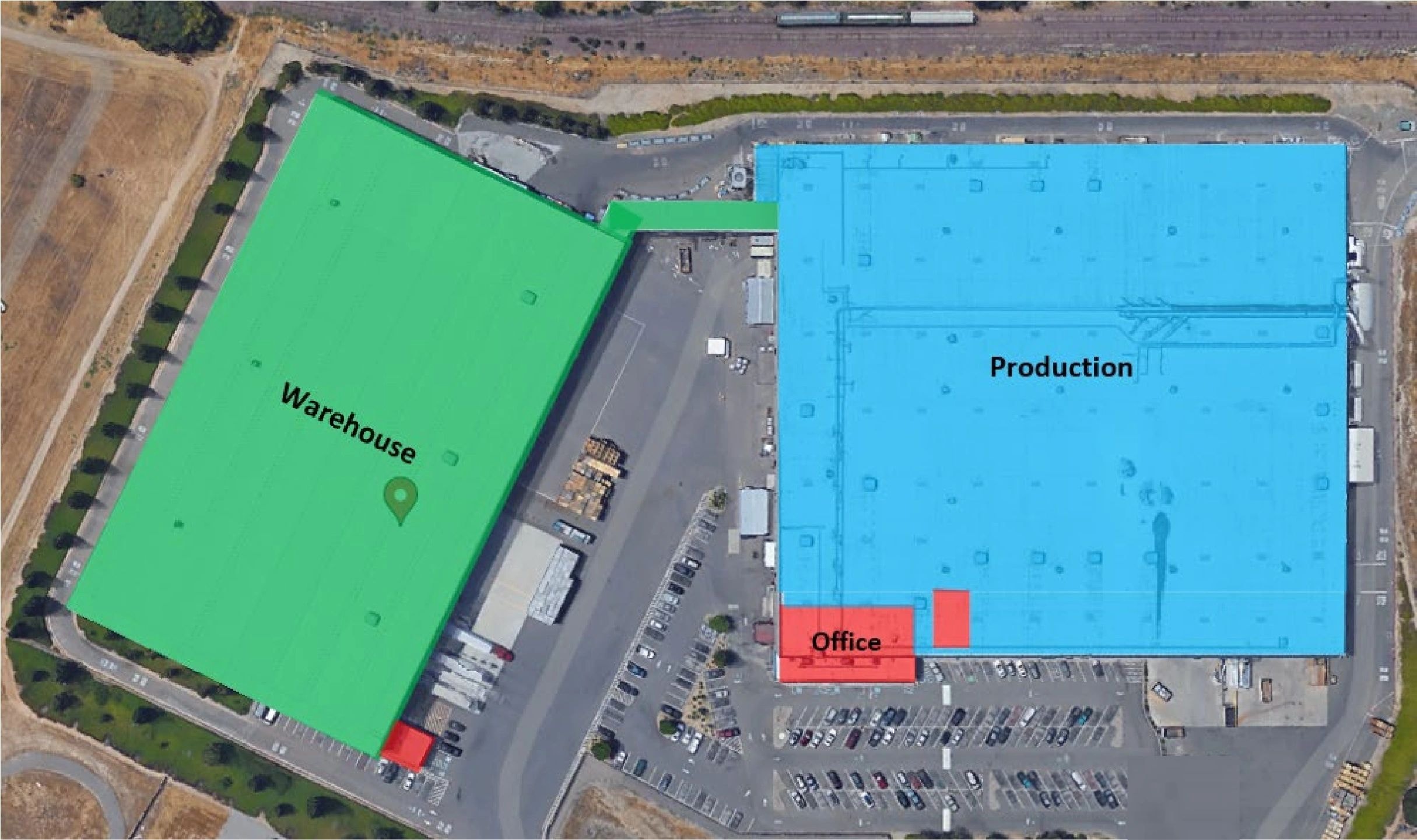
Did you know that poor network performance can cost businesses up to 20% of productivity losses annually? Surveys like these help businesses mitigate such risks by identifying network bottlenecks and suggesting actionable improvements.
The Current Landscape: Why Wired Network Optimisation is Critical
Wired networks form the backbone of any large-scale operation, particularly in offices, production lines, and warehouses. The site survey highlights several challenges that enterprises face today:
- Aging Infrastructure: Many connections relied on Cat5 cables, below the current industry standards of Cat6 or Cat6A.
- Inadequate Power and Space: Issues like limited rack space and outdated cabinets in IDFs (Intermediate Distribution Frames) are common hurdles.
- Signal Coverage Challenges: The site required extensive fiber upgrades and better placement of Access Points (APs) to handle high data throughput in large spaces.
Key Data Points from the Survey
- Cable Replacement Needs: Multiple Cat5 cables in MDF and similar connections across IDFs require upgrading.
- Fiber Connectivity: Recommendations to install 12-strand Single Mode (SM) fibers at strategic locations.
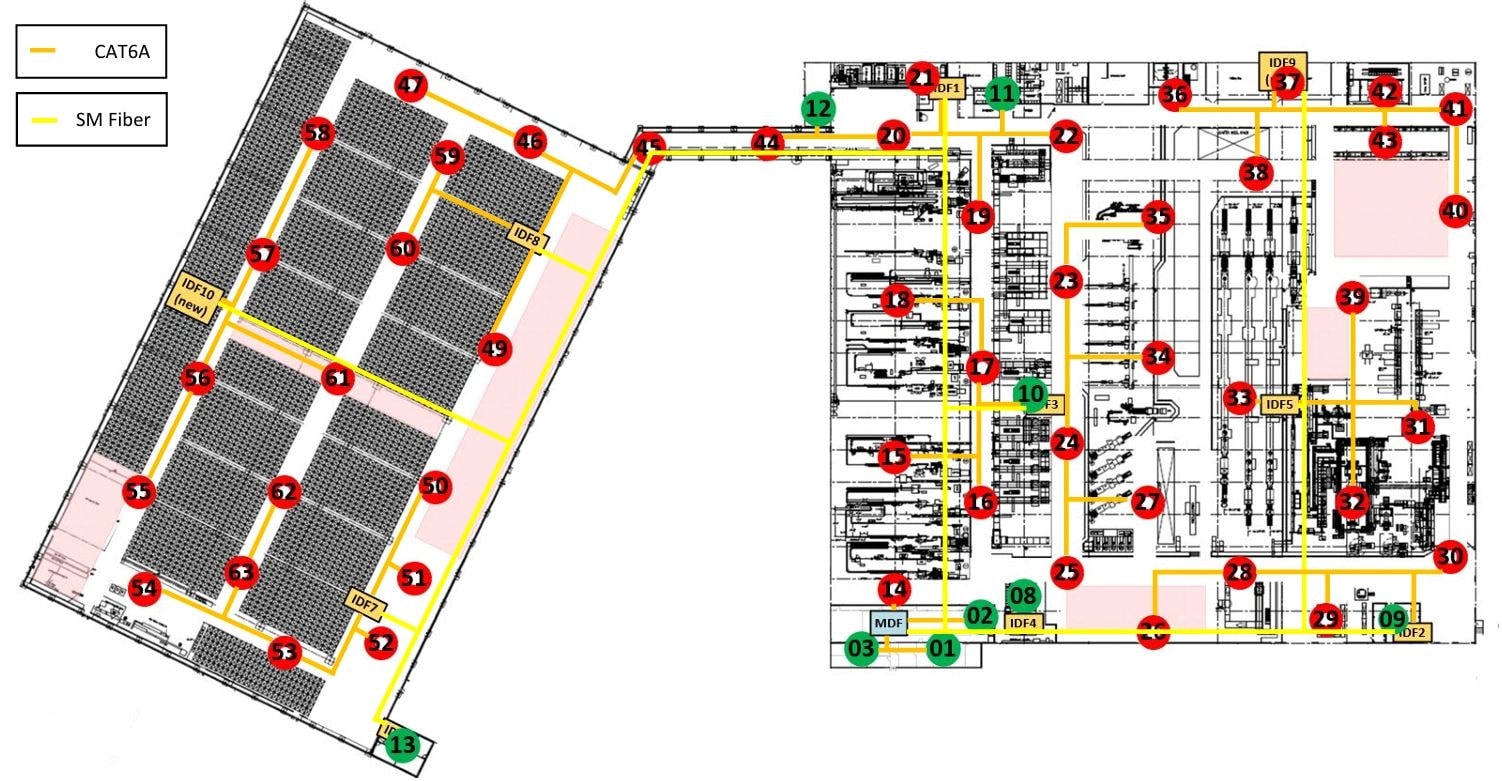
- AP Deployment: Multiple APs, with Cat6A cable runs, were strategically placed for optimal signal coverage.
Benefits of an Optimised Network
- Improved Productivity: Reliable networks reduce downtime and support seamless operations.
- Scalability: Upgrading to Cat6A and SM fibers ensures future-proofing against rising bandwidth demands.
- Enhanced Security: Updated hardware and standardised cable management minimise vulnerabilities.
Risks of Ignoring the Issues
- Frequent downtime leading to production delays.
- Increased maintenance costs due to outdated equipment.
- Security loopholes from non-compliant hardware.
Step-by-Step Insights: Key Takeaways from the Survey
1. Infrastructure Upgrades
- Fiber Upgrades: Installation of 12-strand SM fibers for enhanced speed and reliability.
- Cable Replacements: Transitioning from Cat5 to Cat6A cables across all major IDFs.
2. Access Point Optimisation
- Multiple APs deployed across the facility with precise placements based on signal map analysis.
- Utilised Cisco Meraki for indoor areas and specialised Cisco Meraki for production zones to accommodate specific operational needs.
3. Power and Rack Adjustments
- Recommendations to move power outlets inside cabinets.
- Replaced inadequate racks to support new equipment specifications, ensuring scalability.
4. Patch Panel Management
- Addressing the mix of outdated Cat5 patch panels with new ones that support Cat6/Cat6A for seamless operations.
- Efficient cable management using horizontal and vertical organisers.
AP Placement Map
Tips for Network Engineers: Advanced Solutions
Advanced Advice:
Future-Proof Your Infrastructure: Always plan for higher bandwidth needs. Use fiber optics for critical connections to handle growing data loads.
AP Placement Best Practices:
- Use signal maps to identify dead zones.
- Ensure the right mix of indoor and outdoor AP's.
Standardised Patch Panels:
- Employ uniform cabling standards across MDFs and IDFs for easy troubleshooting.
FAQs:
- Why upgrade to Cat6A cables? They offer better performance, reduced interference, and higher data rates (10 Gbps over 100 metres).
- What is the role of SM fiber in modern networks? SM fibers ensure faster data transmission over longer distances, crucial for large facilities.
- How often should network audits be performed? Annually or after significant hardware or software upgrades.
Conclusion
The wired survey exemplifies how detailed site assessments can uncover actionable insights to optimise enterprise networks. From cable upgrades to AP placements, every step contributes to a more efficient, secure, and scalable system.
Ready to optimise your network? Start by conducting a comprehensive site survey to identify gaps and unlock your full operational potential.
Please book a free consultation appointment by visiting our website at www.3sab.ca or contact us at sales@3sab.ca.